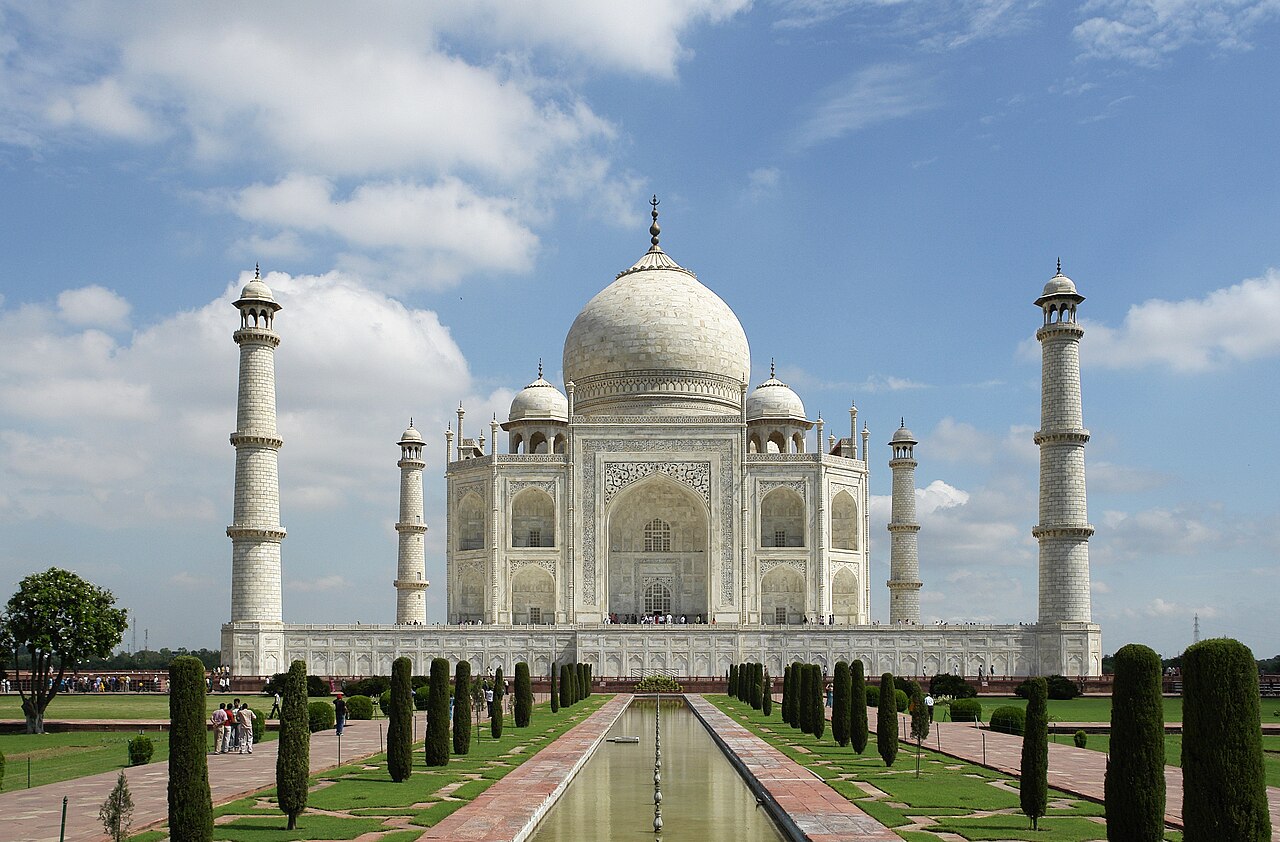
The Taj Mahal is India's single most famous monument and one of the most recognisable buildings in the world — a white marble mausoleum on the banks of the Yamuna River in Agra, and the top reason most first-time visitors to India put Agra on their itinerary.
History
The Taj Mahal was commissioned by Mughal Emperor Shah Jahan in 1632 as a mausoleum for his beloved wife, Mumtaz Mahal, who died giving birth to their fourteenth child. Construction took roughly 20 years, employing an estimated 20,000 artisans and craftsmen from across the Mughal Empire and beyond. It was designated a UNESCO World Heritage Site in 1983 and voted one of the New7Wonders of the World in 2007.
What to See
Beyond the iconic central dome, the complex includes a symmetrical Persian-style charbagh garden, a mosque and guest house flanking the main structure, and the intricate pietra dura inlay work — semi-precious stones set into marble in floral patterns — that covers the mausoleum's surfaces. Shah Jahan and Mumtaz Mahal are both entombed inside.
Entry Fees
There is a ticketed entry with significantly different pricing for domestic and foreign visitors (foreign tourist tickets typically include mausoleum entry; check current rates before visiting, as they are periodically revised). Small bags and permitted items lists are enforced at security — large bags, food, and certain electronics are not allowed inside.
Best Time to Visit
Sunrise is widely considered the best time — cooler temperatures, softer light on the marble, and noticeably smaller crowds than midday. The Taj Mahal is closed to visitors on Fridays. October to March offers the most comfortable overall weather for a visit.
How to Reach
Agra is about 230 km from Delhi, reachable by expressway road (roughly 3-4 hours by car), or by train — the Gatimaan Express is India's fastest train and covers the route in under two hours.


